


Atlantic Coast Farms
25L Digital Egg Incubator for Hatching Eggs — Temperature-Controlled (5–42°C) 12V / 110V
25L Digital Egg Incubator for Hatching Eggs — Temperature-Controlled (5–42°C) 12V / 110V
Couldn't load pickup availability
25L Digital Egg Incubator — Chick Hatching First (Also Works for Reptile Eggs)
A compact, temperature-controlled incubator designed primarily for chick hatching (chicken, duck, quail), while also being suitable for reptile egg incubation. The 25L chamber includes removable shelves, air circulation, and a humidity water tray to help maintain a stable incubation environment.
Product Photos


Temperature Control + Air Circulation
Digital temperature control with a clear LED display and external buttons. Internal air circulation helps keep the chamber temperature more even — a key factor during chick incubation.

Visible, Portable Design
Lightweight construction with a built-in handle and a clear front door so you can monitor incubation progress without opening the chamber.

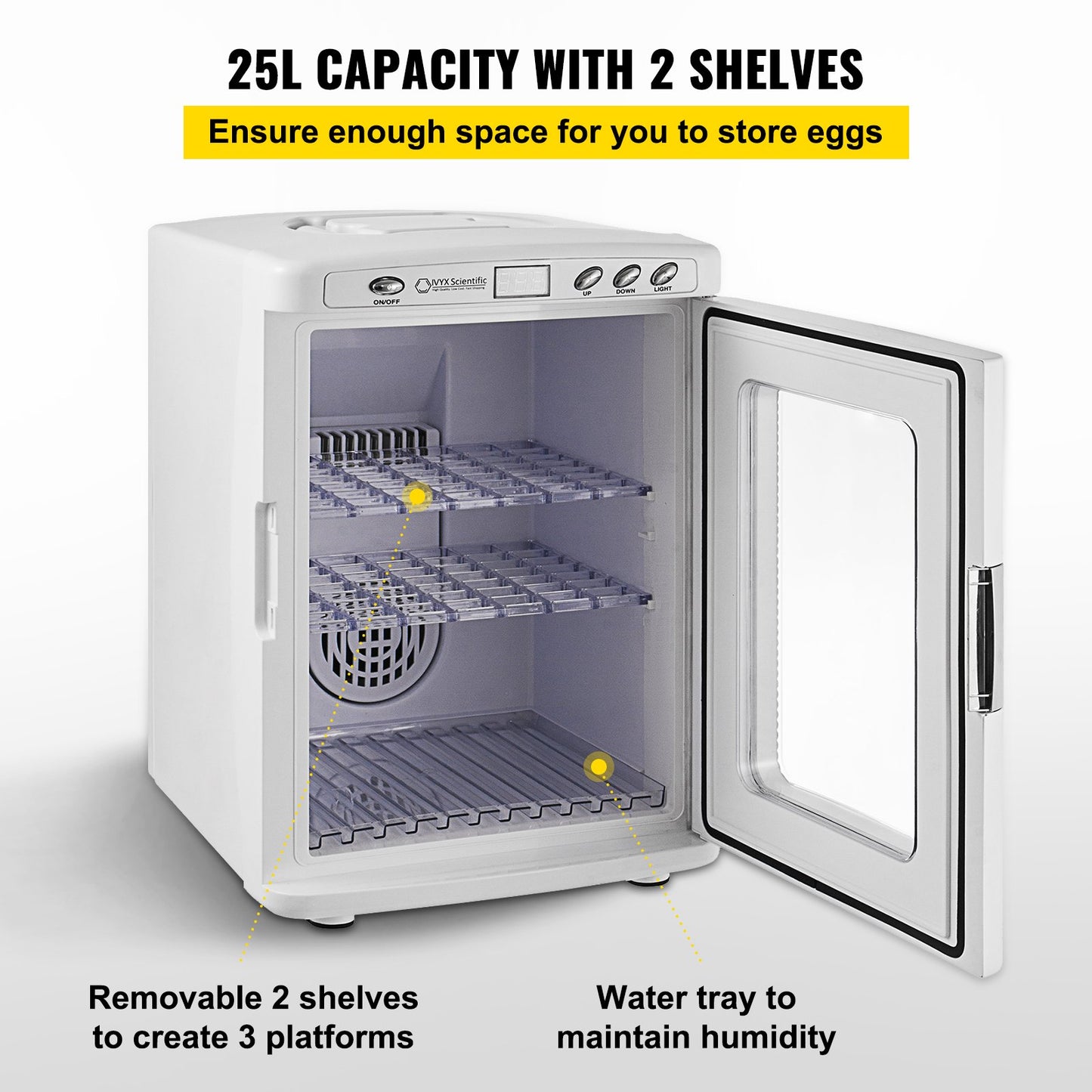
25L Capacity with Shelves & Humidity Tray
The interior includes two removable shelves and a water tray to support humidity management during incubation.
Best Use: Chick Hatching
- Ideal for chicken, duck, and quail eggs
- Air circulation helps reduce hot spots
- Clear door allows easy monitoring
- Flexible shelves for different egg sizes
Also Suitable for Reptile Eggs
Can also be used for reptile egg incubation when adjusted to species-specific temperature and humidity requirements.
What’s Included
- 1 × 25L digital egg incubator (White)
- 2 × removable shelves
- 1 × humidity water tray
- Power cords (as shown in product photos)
FAQs
Is this incubator good for hatching chicks?
Yes — it is designed to support the temperature stability required for poultry incubation.
Does it actively cool like a refrigerator?
No — it actively heats and uses airflow for temperature stabilization. Lower temperatures
depend on ambient room conditions.
Can it be used for reptile eggs?
Yes — many users also incubate reptile eggs by adjusting settings for their specific species.


